
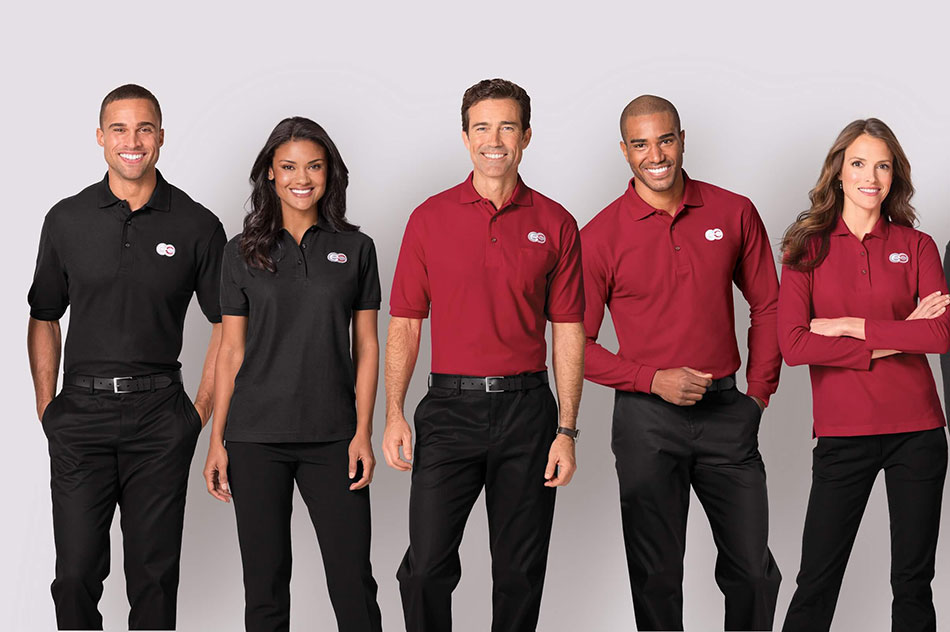
The corporate uniform is experiencing a renaissance. What was once dismissed as a relic of rigid corporate culture is now recognized as one of the most powerful tools for brand expression, employee engagement, and customer trust. At Debra, we have spent four decades proving that the right uniform does not constrain identity — it amplifies it.
The Psychology of Dress
Research consistently demonstrates that clothing affects cognition, behavior, and perception. This phenomenon, known as enclothed cognition, means that what we wear literally changes how we think and perform. A well-designed uniform does not just make employees look professional — it makes them feel professional, capable, and aligned with a larger purpose.
For customers, uniforms serve as instant visual shorthand. They signal authority in a hospital, trustworthiness in a bank, hospitality in a hotel, expertise in a tech showroom. Before a single word is exchanged, the uniform has already begun building the relationship.
The companies that understand this are investing in workwear with the same strategic rigor they apply to marketing campaigns or product development. They recognize that every employee is a brand ambassador, and their clothing is the most visible expression of that role.
Beyond the Polyester Past
The corporate uniform of previous decades deserved its bad reputation. Ill-fitting, synthetic, designed for durability rather than dignity — these garments communicated to employees that their comfort and self-expression were secondary concerns.
That era is ending.
Modern uniform design, as practiced at Debra, begins from a different premise: that employees deserve clothing that respects their individuality while serving the collective brand. This means natural fibers that breathe and move. Tailored silhouettes that flatter diverse body types. Color palettes that feel contemporary rather than institutional.
Our design process starts with employee input. We conduct surveys, hold focus groups, and observe staff in their work environments. A receptionist who stands for eight hours has different needs than a technician who kneels and reaches. A brand that emphasizes innovation requires different visual language than one built on heritage and tradition.
These insights inform every decision, from fabric weight to pocket placement to the exact shade of thread used in topstitching.
Case Study: Sirio Group
When Sirio Group, a multinational hospitality company, approached us for a complete uniform overhaul, they faced a familiar challenge. Their existing program was fragmented — different properties used different suppliers, resulting in inconsistent quality and appearance. Employee satisfaction was low. Guest feedback frequently mentioned that staff looked "tired" or "uninspired."
Our solution was a modular uniform system built around a core palette of navy, cream, and gold — colors that communicated both luxury and approachability. Each role received a distinct but related silhouette: tailored blazers for management, smart polo shirts for front-of-house, practical yet polished separates for back-of-house.
The fabric selection prioritized performance. Moisture-wicking properties for kitchen staff. Stretch panels for housekeeping. Stain-resistant treatments for dining room servers. Every garment was tested in real working conditions before final approval.
Six months after rollout, Sirio Group reported a 34% increase in employee satisfaction scores related to workwear. Guest satisfaction with staff appearance rose 28%. Most tellingly, the company saw a measurable uptick in social media posts featuring staff — organic marketing they had not anticipated.
Sustainability in Workwear
The corporate uniform industry generates enormous textile waste. Programs that refresh annually discard millions of garments. Cheap construction means items fail quickly. Synthetic fabrics shed microplastics with every wash.
Debra L Harrington addresses this through three strategies.
Durability First. We design uniforms to withstand industrial laundering for years. Reinforced seams, colorfast dyes, and abrasion-resistant fabrics extend garment life significantly.
Circular Design. When uniforms do reach end-of-life, our take-back program ensures responsible recycling or upcycling. Some materials become insulation. Others are reprocessed into new textiles. Nothing enters landfill if we can prevent it.
Natural Materials. Wherever possible, we use organic cotton, linen, wool, and other biodegradable fibers. These materials feel better against the skin, age more gracefully, and return to the earth without harm.
The Future of Workwear
As hybrid work models reshape corporate culture, the uniform is evolving too. We are designing "flex-formal" pieces that transition seamlessly from video calls to client meetings. Smart fabrics that regulate temperature in unpredictable office environments. Subtle branding that photographs well on camera without dominating in person.
The uniform of tomorrow will be less about conformity and more about cohesion — a visual system that unites diverse individuals in shared purpose while honoring their unique contributions.
The companies that thrive in the coming decade will be those that treat every touchpoint with intention. The uniform is no exception. It is a daily opportunity to reinforce values, build culture, and demonstrate respect for the people who represent your brand.
At Debra, we do not just design uniforms. We design confidence, belonging, and pride. We design the clothing that helps people become the best version of themselves at work.
That is a revolution worth wearing.